
Table of Contents
- Introduction to Next-Gen Mobile Innovations
- 5G Network and Its Impact on Mobile Devices
- Foldable and Flexible Displays: The Future of Smartphones
- Artificial Intelligence and Machine Learning in Mobile Devices
- Comparison of Next-Gen Mobile Devices in the US Market
- Conclusion and Future Outlook
Introduction to Next-Gen Mobile Innovations
The world of mobile technology is rapidly evolving, with new innovations and advancements emerging every year. In 2026, we can expect to see significant improvements in mobile devices, including faster processors, enhanced cameras, and more efficient batteries. One of the most exciting developments is the integration of 5G networks, which promises to revolutionize the way we interact with our mobile devices. With the ability to support faster data speeds and lower latency, 5G networks will enable a new generation of mobile applications and services. As we explore the latest next-gen mobile innovations, it's essential to consider the impact of these advancements on the US market. With a wide range of mobile devices available, consumers have more options than ever before. From budget-friendly options like the Samsung Galaxy A series to high-end flagships like the Apple iPhone 13 Pro, there's a mobile device to suit every need and budget. For more information on the latest mobile devices and trends, visit https://www.bcspress.com.5G Network and Its Impact on Mobile Devices
The introduction of 5G networks is one of the most significant developments in the mobile industry. With the ability to support faster data speeds and lower latency, 5G networks will enable a new generation of mobile applications and services. For example, the Samsung Galaxy S21 Ultra and the Apple iPhone 13 Pro both support 5G connectivity, allowing users to take advantage of faster data speeds and more reliable connections. In the US market, 5G networks are being rolled out by major carriers like Verizon, AT&T, and T-Mobile, with coverage expanding to more areas every day. One of the key benefits of 5G networks is the ability to support more devices and applications. With the increased capacity and lower latency of 5G, users can enjoy a more seamless and responsive mobile experience. For instance, the Google Pixel 6 Pro and the OnePlus 9 Pro both feature 5G connectivity, allowing users to take advantage of faster data speeds and more reliable connections. Additionally, 5G networks will enable new use cases like augmented reality, virtual reality, and the Internet of Things (IoT).Benefits of 5G Networks
Some of the benefits of 5G networks include:- Faster data speeds: 5G networks can support data speeds of up to 20 Gbps, which is significantly faster than 4G networks.
- Lower latency: 5G networks have lower latency than 4G networks, which means that data can be transmitted and received more quickly.
- Increased capacity: 5G networks can support more devices and applications than 4G networks, making them ideal for IoT and other applications.
- Improved reliability: 5G networks are designed to be more reliable than 4G networks, with built-in redundancy and failover capabilities.
Foldable and Flexible Displays: The Future of Smartphones
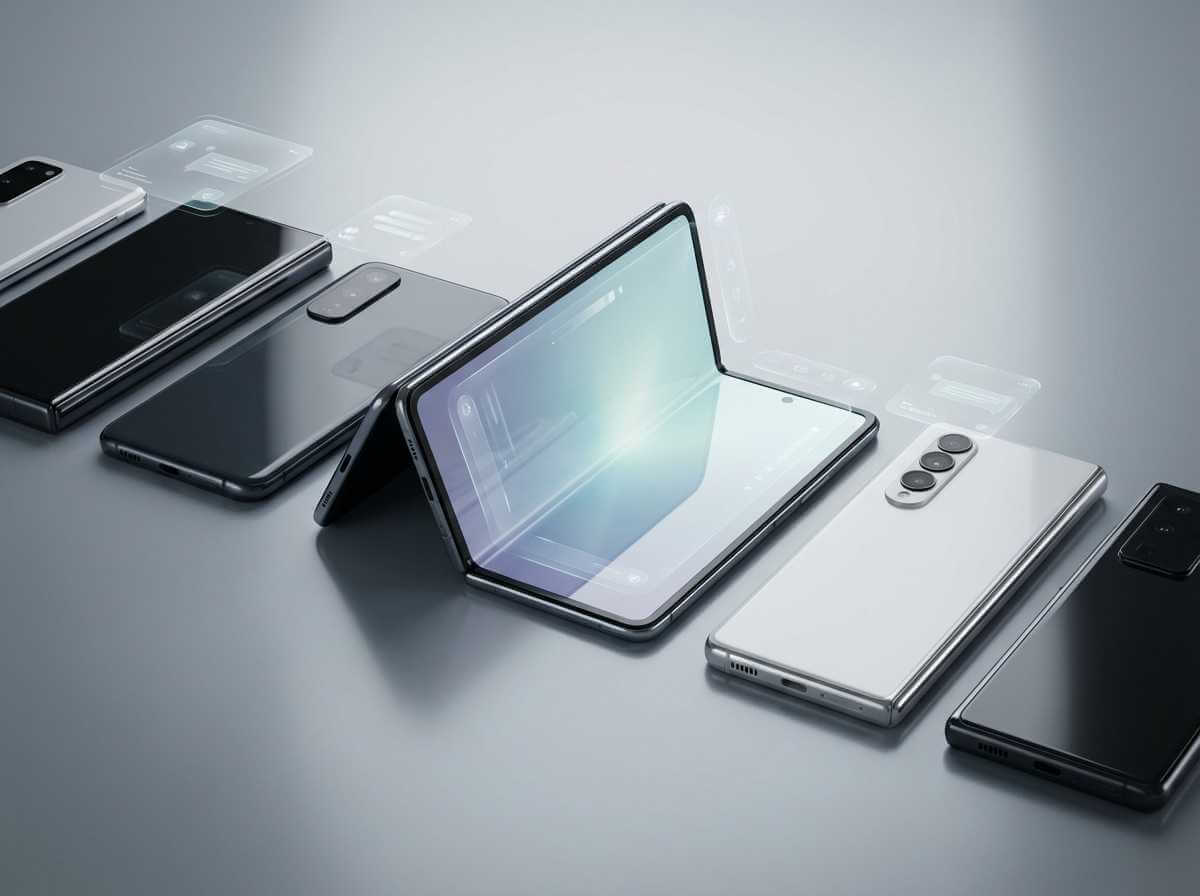
Another exciting development in the mobile industry is the introduction of foldable and flexible displays. These displays allow users to enjoy a larger screen area without the need for a larger device. For example, the Samsung Galaxy Z Fold2 and the Motorola Razr both feature foldable displays, allowing users to enjoy a larger screen area without the need for a larger device. One of the key benefits of foldable and flexible displays is the ability to provide a more immersive experience. With a larger screen area, users can enjoy more detailed and engaging content, such as videos and games. Additionally, foldable and flexible displays can be used to create new form factors, such as devices that can be folded or bent to fit into smaller spaces.Benefits of Foldable and Flexible Displays
Some of the benefits of foldable and flexible displays include:- Larger screen area: Foldable and flexible displays can provide a larger screen area without the need for a larger device.
- More immersive experience: With a larger screen area, users can enjoy more detailed and engaging content, such as videos and games.
- New form factors: Foldable and flexible displays can be used to create new form factors, such as devices that can be folded or bent to fit into smaller spaces.
- Increased durability: Foldable and flexible displays can be designed to be more durable and resistant to damage than traditional displays.
Artificial Intelligence and Machine Learning in Mobile Devices
Artificial intelligence (AI) and machine learning (ML) are becoming increasingly important in mobile devices. With the ability to learn and adapt to user behavior, AI and ML can be used to improve the user experience and provide more personalized recommendations. For example, the Apple iPhone 13 Pro and the Google Pixel 6 Pro both feature AI-powered cameras, which can automatically adjust settings and provide more detailed and engaging photos. One of the key benefits of AI and ML in mobile devices is the ability to provide more personalized recommendations. With the ability to learn and adapt to user behavior, AI and ML can be used to suggest more relevant content, such as music, videos, and apps. Additionally, AI and ML can be used to improve the user experience, such as by providing more intuitive and responsive interfaces.Benefits of AI and ML in Mobile Devices
Some of the benefits of AI and ML in mobile devices include:- More personalized recommendations: AI and ML can be used to provide more relevant content, such as music, videos, and apps.
- Improved user experience: AI and ML can be used to improve the user experience, such as by providing more intuitive and responsive interfaces.
- Enhanced security: AI and ML can be used to improve security, such as by detecting and preventing malware and other threats.
- Increased efficiency: AI and ML can be used to improve efficiency, such as by automating tasks and providing more detailed and engaging content.
Comparison of Next-Gen Mobile Devices in the US Market
The US market is flooded with a wide range of next-gen mobile devices, each with its unique features and benefits. Some of the most popular devices include the Apple iPhone 13 Pro, the Samsung Galaxy S21 Ultra, and the Google Pixel 6 Pro. When comparing these devices, it's essential to consider factors such as price, features, and performance. In terms of price, the Apple iPhone 13 Pro is one of the most expensive devices, with a starting price of around $1,000. The Samsung Galaxy S21 Ultra and the Google Pixel 6 Pro are more affordable, with starting prices of around $800 and $600, respectively. However, it's essential to consider the features and benefits of each device, as well as the overall value for money.Comparison of Next-Gen Mobile Devices
Some of the key features and benefits of next-gen mobile devices include:- Apple iPhone 13 Pro: Features a 6.1-inch display, Apple A15 Bionic chip, and a quad-camera setup with a starting price of around $1,000.
- Samsung Galaxy S21 Ultra: Features a 6.8-inch display, Qualcomm Snapdragon 888 chip, and a quad-camera setup with a starting price of around $800.
- Google Pixel 6 Pro: Features a 6.7-inch display, Google Tensor chip, and a dual-camera setup with a starting price of around $600.
Conclusion and Future Outlook
In conclusion, the next-gen mobile innovations in 2026 are set to revolutionize the way we interact with our mobile devices. With the introduction of 5G networks, foldable and flexible displays, and AI and ML, we can expect to see significant improvements in mobile devices. As the US market continues to evolve, we can expect to see more devices with advanced features and benefits, such as improved cameras, faster processors, and more efficient batteries. As we look to the future, it's essential to consider the potential impact of these innovations on our daily lives. With the ability to support faster data speeds and lower latency, 5G networks will enable new use cases like augmented reality, virtual reality, and the Internet of Things (IoT). Additionally, foldable and flexible displays will provide a more immersive experience, while AI and ML will improve the user experience and provide more personalized recommendations. In the US market, we can expect to see a wide range of next-gen mobile devices, each with its unique features and benefits. From budget-friendly options like the Samsung Galaxy A series to high-end flagships like the Apple iPhone 13 Pro, there's a mobile device to suit every need and budget. As the market continues to evolve, we can expect to see more devices with advanced features and benefits, such as improved cameras, faster processors, and more efficient batteries.
Tags:
Tech Analysis